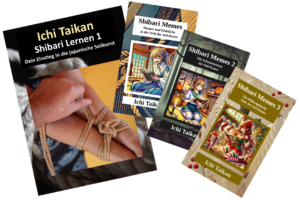
When algorithms do not understand art
Why Shibari often stays invisible onlineand what that reveals about modern media
The digital world judges images and content
long before a human ever sees them.
What emerges from this are absurd misclassifications,
blocked posts,
and visibility that depends not on the content itself
but on the randomness of a filter.
This blog takes you behind the curtain.
How platforms read art the wrong way
and why Shibari needs more context
than any algorithm could ever recognize.

The examples later in this post show just how absurd these mechanisms can be.
⭐ When modern media misunderstands art
Shibari and the invisible boundaries of algorithms
Shibari is an art form built on presence, trust, flow of lines and human connection.
But in the digital world, Shibari is often no longer seen by people. It is seen by algorithms.
And that is where a problem emerges, one that affects many body artists,photographers,dancers and content creators alike.
Platforms do not understand context.
They recognize patterns.
And Shibari does not fit their patterns.
I experience this every day.
This blog post offers a glimpse into what happens when art is evaluated by automated filters instead of human perception.
⭐ The core issue: a digital world without context
On most major platforms, it is no longer a human who decides whether an image or text remains visible. It is a system guided by questions such as:
-
How much skin is visible
-
Which keywords appear
-
Does the image look physically intimate
-
Were similar visuals flagged as risky in the past
Shibari can be many things depending on context – artistic, intimate, emotional, aesthetic or erotic.
In my own work and exhibitions, I intentionally show the non-pornographic, artistic and relational side of rope art.
And this is exactly where the problems begin.
Automated misunderstanding
Incorrect classification
Loss of visibility
Lost opportunities
Not because the content is harmful,
but because the systems cannot understand the context.
It is not malice.
It is digital blindness.
⭐ How platforms respond to Shibari
a pattern that keeps repeating
Whether Instagram, Amazon, Google, Kleinanzeigen or LinkedIn.
The names differ, yet the problems look surprisingly similar.
✔ Instagram / Meta
-
Images are incorrectly flagged
-
Visibility drops without warning
-
Shadowbans appear with no explanation
Accounts are suspended without real appeal options
-
Actual support channels barely exist
-
Even artistic photography is labeled as adult content
✔ Amazon (KDP / Ads)
-
Books are accepted, ads are rejected
-
Replies are automated, no human review
-
Algorithms react only to keywords like Shibari
✔ Google Business
-
Business profiles are wrongfully blocked
-
Verification is automated
-
No chance for meaningful clarification
✔ Kleinanzeigen
-
Workshops and exhibitions are removed
-
Reasons change and contradict one another
-
From "spam because entry is free" to "pornographic service"
-
In theory professional, in practice just as restrictive
-
Body art is barely shown
-
Advertising is rejected
The common thread in all these cases:
No one is actually looking.
An algorithm makes the decision, and rarely the right one.
⭐ What it feels like
when art becomes invisible
Visibility is not only important to me.
It matters for those who want to experience Shibari in a safe, artistic and professional setting.
When platforms misclassify and remove my content, it means:
-
People cannot find workshops
-
Events stay unnoticed
-
The chance to discover Shibari beyond fetish imagery disappears
-
Spaces for real encounters remain unseen
For me, it feels like opening doors, only to watch algorithms push them shut again.
I try to explain, I appeal, I file requests. Yet what returns are template replies with no understanding of context.
An algorithm does not correct itself just because you tell it that it is wrong.
⭐ What works well
and why it matters
With all the criticism, I want to emphasize something clearly.
There are platforms that understand Shibari
or at least remain open enough not to judge it too quickly.
And I want to name them intentionally.
✔ Joyclub
A community that accepts body awareness, alternative lifestyles and diversity.
Content is visible, interactions happen, people are open and curious.
✔ Fetlife
A space for exchange, connection and creative projects.
So far without the fear of AI-driven misinterpretation.
✔ Print media
Surprisingly stable and reliable.
Newspapers, local magazines, community publications.
When you place an ad, a human reviews it.
No algorithm counting skin pixels, no automated removals, no false decisions.
The reality is noticeable here as well.
-
Print has less impact today
-
Audiences read locally less often
-
Ads are expensive
-
Responses are rare
But one thing still works consistently:
You are treated fairly.
You are seen.
You are understood.
And in 2025, that alone has value.
⭐ Why these functioning channels are not enough
Joyclub and Fetlife have stable communities
but they do not reach the people beyond the fetish and swinger world.
Those for whom Shibari could be something new, inspiring, artistic.
Print media engage with fairness but they are losing reach.
If Shibari happens only within niches,it will remain a niche.
But Shibari is:
-
art
-
connection
-
body awareness
-
trust
-
mindfulness
-
nonverbal communication
-
a counterbalance to digital haste
And all of that does not belong hidden away.
It belongs, at least for me, in the center of society.
⭐ Why I keep going anyway
Because I know how many people are moved by Shibari.
How many open up in workshops, find calm or rediscover themselves.
How many use exhibitions to let go of clichés.
How many breathe again for the first time during a session.
Shibari is too valuable to let algorithms slow it down.
So I continue.
-
Exhibitionsthat let art speak
-
Workshopsthat allow feeling
-
Blog poststhat explain
-
Booksthat invite
-
Imagesthat tell stories
Art needs people, not machines.
And Shibari needs spaces that see, not filter.
⭐ Conclusion: Visibility should not be decided by algorithms
Modern media giants have power, but no understanding.
They read pixels, not stories.
They analyze patterns, not emotions.
They see skin, but not context.
But real people can.
That is why it matters to keep Shibari visible, despite the obstacles.
On platforms, in physical spaces, in exhibitions,
wherever humans are willing to truly look.
Not because it is easy.
But because it is meaningful.
⭐ Real-world example
When art suddenly becomes “sexually motivated contact seeking”
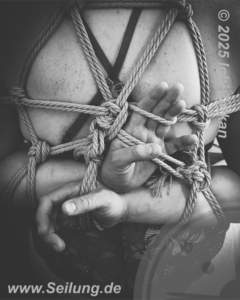
Caption:
Rope and the human body
a meeting of touch and emotion.
Photography becomes a friend inviting us
to share and transform moments into art.
An example from my own publications.
An aesthetic Shibari photograph. Fully clothed, clearly artistic, no sexual action, no nudity, no invitation of any kind.
Yet the platform’s explanation was:
“This image may imply sexual activity or encourage sexual interaction.”
And that was after a so-called second review..
The likely trigger?
Not the content itself
but simple keywords like Ropes, Touch, Emotioncombined incorrectly by an algorithm.
For most people clearly recognizable as artistic expression.
For automated systems, a false alarm.
And the result is always the same:
The post is removed even though there is nothing sexual about it.
My book cover approved, then suddenly flagged as “sexually suggestive”
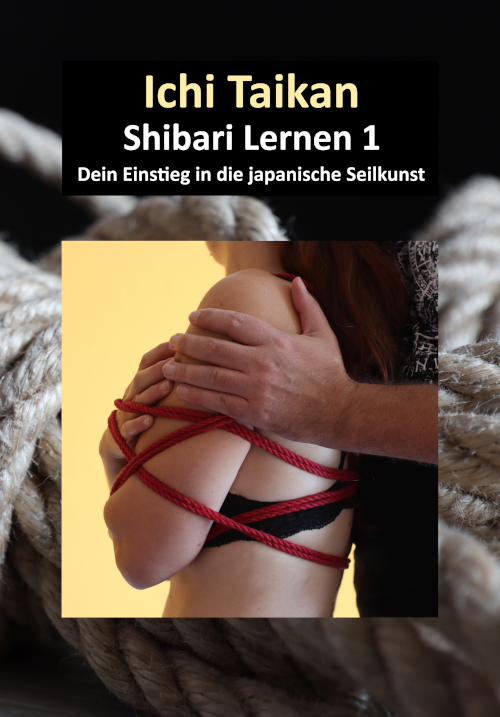
One of the most absurd experiences I had was when I tried to run ads for my instructional book Learning Shibari 1 on Amazon.
The book was published without issue.
It sold normally.
It was classified as harmless and acceptable by Amazon KDP.
But the moment I wanted to advertise it, a Kafka-like loop of rejections began.
Among other things, I was told that my cover contained:
“sexual innuendo”
“suggestive posing”
“sensitive body areas”
“undue focus on breasts or buttocks”
and that I should ensure
“no minors are depicted in sexual situations”
Anyone looking at the cover next to that statement can see immediately how absurd it is.
To me, the photo conveys calm, focus, and trust.
Others may interpret it differently,
but the claims made by automated moderation have nothing to do with the intention of the image.
And here the problem becomes very clear.
Neither I nor the photo nor its context were the issue.
The issue was the automated moderation logic.
The algorithm saw “body” + “rope”
and simply selected the most drastic violations from its list
with no relation to the actual content.
When a free workshop suddenly becomes a “pornographic service”
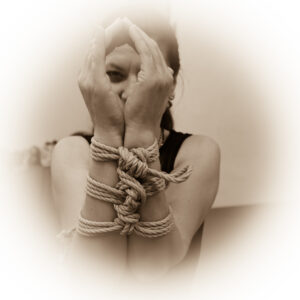
Shibari Introduction Evening
–
Fascination of Japanese rope art
Eine Anzeige für einen kostenlosen Shibari-Schnupperabend wurde gelöscht und mehrmals abgelehnt – und zwar jedes Mal mit einer anderen Begründung.
Zunächst hieß es, die Anzeige sei am „falschen Ort“.
Beim nächsten Versuch war es plötzlich eine „doppelte Anzeige“, obwohl es sich um zwei völlig verschiedene Veranstaltungen handelte.
Dann wurde mir eine „irreführende Preisangabe“ vorgeworfen – weil das Event kostenlos war.
Und schließlich folgte der „Knaller“:
Die Veranstaltung sei eine „pornografische oder jugendgefährdende Dienstleistung“.
This despite being a public, artistic and clearly cultural event.
Und es wurde noch absurder:
Auf meine Nachfrage erklärte man mir schriftlich, Shibari könne „häufig auch ein Fetisch sein“ – und deshalb dürfe es grundsätzlich nicht auf einer Plattform erscheinen, die Minderjährigen zugänglich ist.
Eine Argumentation, die so pauschal ist, dass man damit im Grunde halb Kleinanzeigen sperren könnte – denn fast jedes Alltagsobjekt kann von irgendwem fetischisiert werden.
Das hat jedoch nichts mit Kunst, Kontext oder tatsächlichem Angebot zu tun.
Das wichtigste Detail:
Jeder neue Einspruch führte zu einer neuen, völlig anderen Ablehnungsbegründung – als würde das System zufällig eine Fehlkategorie ziehen, anstatt den Inhalt tatsächlich zu prüfen.
The misunderstanding was not the event itself.
It was the mechanism behind it.
When content is judged without being seen, meaning gets lost – and sometimes visibility disappears before it ever really existed.
If something in you resonates here,
you will find more reflections on body art, connection
and the subtleties of rope on my page.
Blog entries can open doors
and books can lead you one step deeper.
My self-published works range from humorous snapshots
to practical foundations for beginning your own rope journey.
If you want to explore further, you are warmly invited.